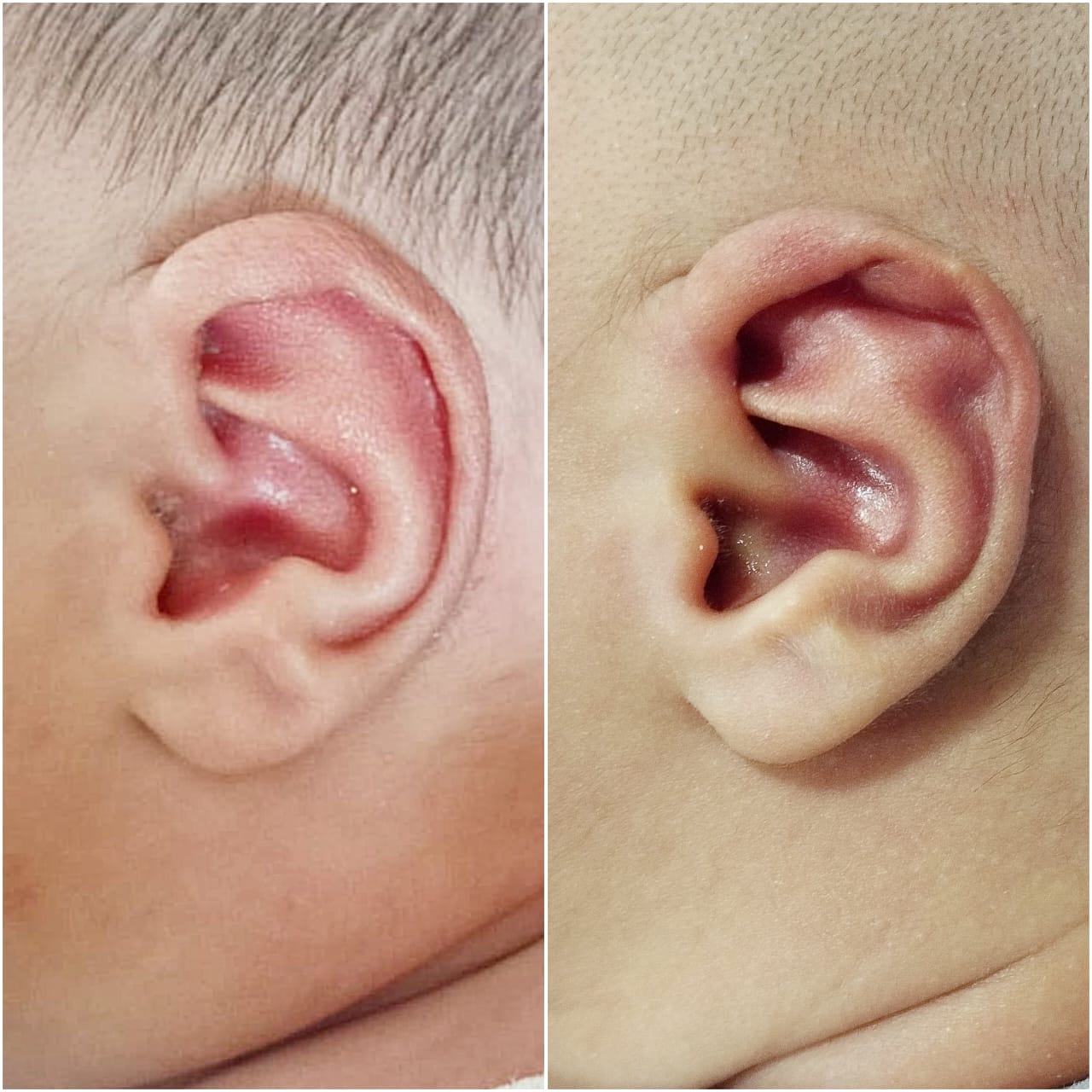
Some babies are born with ears that have a slightly different appearance in terms of shape or positioning. Although some abnormalities of the ears tend to correct themselves over time, others need intervention in order to get optimal results. By diagnosing such issues early on, parents will be able to look at various treatment options that are both safe and easy for their baby. At Chughtai Anaplastology, there are experts in anaplastology who provide specialized care for babies born with abnormal ears.
What Are Baby Ear Deformities?
A congenital defect involving the form, fold, or placement of the baby’s ear is called a deformity. Unlike malformations of the ear, where parts are absent or undeveloped, deformities of the baby’s ear involve a normally formed ear but are deformed in some way.
Common types of baby ear deformities are the following:
- Lop ear
- Prominent ear
- Constricted ear
- Stahl’s ear
- Helical rim deformities
- Cup ear
These deformities may be unilateral or bilateral and are often present at birth.
Why Early Treatment Matters
The initial weeks following birth present the optimal time for correction since a baby’s ear cartilage is soft and pliable owing to the presence of maternal hormones. The process involves the gentle re-shaping of the ears without any pain or incision at this early stage.
There are various advantages associated with early intervention:
- Prevention of the need for a surgical procedure in the future
- Achieving natural results
- Being comfortable and painless
- Encouragement of healthy growth in an emotional and social perspective for the child
Late intervention may make non-surgical correction ineffective and increase the likelihood of opting for a surgical procedure.
How Baby Ear Deformities Are Treated
Treatment will depend on the type and degree of the deformity.
In infants, ear molding is usually the best option. An ear molding appliance is fitted over the deformed ear with the aim of shaping the cartilage in a way that is desirable. This procedure is non-invasive and involves regular appointments and lasts for several weeks.
For older kids or in cases where ear molding does not work, reconstructive surgery may be recommended by specialists, depending on the condition of the patient.
A clinical examination will enable a good determination of which treatment to adopt for each infant.
Why Choose Chughtai Anaplastology?
Chughtai Anaplastology offers specialized services to patients in need of reconstructive and prosthetic rehabilitation. Being specialists in anaplastology and advanced treatment methods, the staff concentrates on an individualized approach to each patient.
What parents receive by choosing Chughtai Anaplastology includes:
- Experts in anaplastology
- Thorough examination and planning of treatment
- Advanced non-surgical treatment for eligible infants
- Patient-oriented approach with follow-ups
- High standards of quality and clinical performance
Consultation at the early stage is very effective.
FAQs
1.Can baby ear deformities correct themselves?
Some minor deformities may improve naturally, but many benefit from early evaluation and treatment to achieve the best cosmetic outcome.
2.Is ear molding painful for babies?
No. Ear molding is a gentle, non-invasive procedure that is generally well tolerated by newborns.
3.When should parents seek treatment?
Ideally, within the first few weeks after birth, when the ear cartilage is most responsive to molding.
4.Do all ear deformities require surgery?
No. Many newborn ear deformities can be corrected without surgery if treated early.
Conclusion
Ear deformities in babies are common, and early detection allows treatment to be more easily facilitated and effective. Non-surgical correction of baby ears is an extremely successful process if undertaken in a timely fashion. Chughtai Anaplastology has the best experts in anaplastology, blends medical knowledge with innovative techniques, providing compassionate and customized care for children.